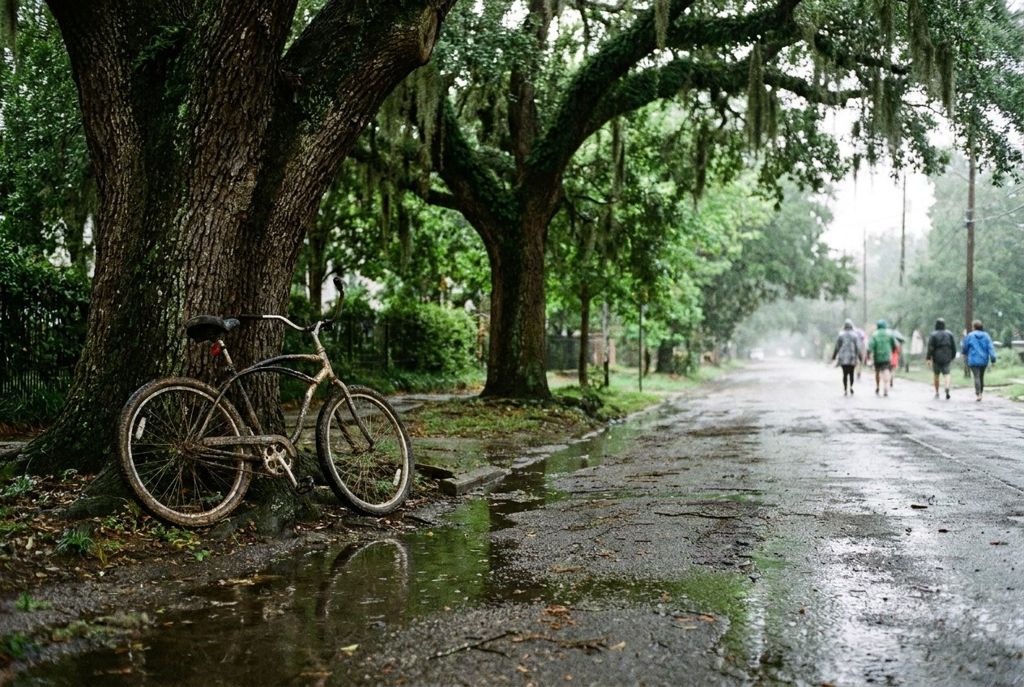
The city is flat, but it is not easy. Heat, sudden rain, rough streets and two busy canal bridges call for some planning, and the people whose streets you ride deserve courtesy.
- Ride
- Any ride, any length
- Surface
- Rough city streets, tracks, puddles
- Best months
- Late October through April
- Getting there
- Plan the canal crossing before you leave
- Bring
- Water, lights, lock, rain layer, small repair kit
Heads up: In summer, aim to be off the open streets by late morning. Afternoon storms build fast, and low streets can fill with water in minutes.
New Orleans looks like an ideal city for cycling: no hills, short distances, and plenty of quiet side streets. Much of the time it is. But the climate, the condition of the streets and a few hard crossings catch out riders who come unprepared. These notes apply across the city, with particular attention to the ride into the Lower Ninth Ward.
Heat and the seasons
From roughly May to September, New Orleans is hot and very humid. Daytime temperatures are high, nights bring little relief, and the air feels heavy. On a bike the breeze you make helps, but the moment you stop the heat comes down on you. In the Lower Ninth, where many blocks north of St. Claude are open grass with few trees, there is little shade to shelter in.
- Ride early. The first hours after sunrise are the most comfortable of the day.
- Carry plenty of water, more than you expect to need, and drink before you are thirsty.
- Wear a hat under your helmet or a cap with a brim, light clothing and sunscreen.
- Know the signs of heat exhaustion: dizziness, headache, nausea, heavy sweating. Stop, find shade and cool down.
The cooler months, from late October to April, are the best time to ride. Days are mild, sometimes warm, with occasional cold fronts that bring brisk, clear weather. Spring brings its own storms, but most days are pleasant.
Storms and standing water
Summer afternoons often bring thunderstorms that build quickly and drop heavy rain in a short time. Lightning is a real hazard on open ground, and the river levee is about as open as ground gets. If thunder is near, get off the levee and find shelter.
Heavy rain can flood low streets fast, sometimes within minutes. Water hides potholes, open drains and debris. Do not ride through standing water whose depth you cannot judge. Wait it out under cover; the water usually drains away again in time.
The Atlantic storm season covers the months from June through November. If a storm is forecast, follow local news and official advice, and put off any ride. Bridges, roads and services may close well before a storm arrives.
Pairs well with: After the water: the Lower Ninth since 2005
Rough streets and tracks
New Orleans streets are hard on bikes. Potholes are common and can be deep, pavement buckles over tree roots, and some streets in the Lower Ninth turn from asphalt to broken patches and gravel. Wider tyres and a slightly slower pace make a big difference. Scan the road well ahead, and be ready for a surprise at every block.
In other parts of the city, streetcar tracks are a hazard. Narrow tyres can drop into the groove and throw you off. Cross tracks at as close to a right angle as you can, and never ride along them. Watch also for the metal plates and grates found on many streets, which are slippery when wet.
A little preparation saves a long walk home. Check your tyres and brakes before you set out, and carry a spare tube or patch kit, a small pump and the tools to use them. Punctures are common on streets strewn with glass and debris, and in the Lower Ninth there may be nowhere close by to fix one. A phone with a charged battery and a map saved for offline use is worth having too.
The canal bridges
To reach the Lower Ninth from the French Quarter, the Marigny or the Bywater, you have to cross the Industrial Canal. The St. Claude Avenue bridge is a low drawbridge that opens for passing ships, so you may wait a while. The Claiborne Avenue bridge rises high over the canal, with a long climb and fast traffic. Both carry heavy vehicle traffic and neither is a relaxed ride.
Many riders choose to walk across on the side path rather than ride in the lanes. Lane layouts, barriers and rules for cyclists on both bridges change from time to time, so check the current arrangement before you go. The orientation to the ward covers both crossings and what lies on the far side.
Dogs, locks and lights
Dogs are common in the ward, some behind fences and some not. Most bark and stay put. If one gives chase, slow down, speak calmly, and put the bike between you and the dog if needed; speeding off can make it worse.
Lock your bike whenever you leave it, even for a moment, to something solid and fixed. Take lights and loose items with you. Carry front and rear lights in any case: dusk comes early in winter, and lighting on some streets is patchy, especially on the ride back from the bayou platform at sunset.
Photographs and good manners
The Lower Ninth is a residential neighbourhood, and many of its people have had their homes photographed by strangers for years. Be the visitor who does it well:
- Photograph houses from the street, and never go onto a porch, lot or yard.
- Ask before photographing anyone, and accept a refusal gracefully.
- Keep the sidewalk and driveways clear when you stop.
- Greet people. A wave or a good morning costs nothing.
Treat damaged or empty houses with the same respect as lived-in ones; they still belong to families. Ride at a pace that lets you notice people, and you will find the ward a friendly place to spend a morning.